28 February 2019
How a SIM is Orphaned
As M2M grows, the number of SIM cards in
devices grows. Inevitably, some of those
devices are left switched on, while the accompanying M2M service has been
terminated. A good example of this is
the use of SIM cards in a vehicle tracking system. The vehicle might be sold, or the owner of
the vehicle might terminate their tracking contract, but the SIM typically
remains in the vehicle for the lifetime of the vehicle. Eventually, the network subscription
associated with the SIM is suspended, and then terminated, which "orphans" the
SIM.
The orphaned SIM continues to attempt
to attach to the network, and in cases, continues to generate traffic e.g. an
alarm system attempting to send event-based SMS messages while the account is suspended.
Therefore, orphaned SIM cards
continue to use core network resources at several network nodes, as well as
radio network resources, while never generating any revenue, and having no
possibility of generating revenue in future.
This poses a
growing problem for the Mobile Network Operator, as the number of orphan SIM cards
is increasing, and these devices can remain in the market for years. This problem is set to grow at a high rate
with the expected high growth of IoT.
The Impact of Orphan SIM Cards on the Network
A SIM card in a mobile network with no corresponding network account is an orphan SIM. The number of orphan SIM cards in a network will grow over time, as SIM cards are left in devices while their subscription has been terminated.
A typical
network that supports a substantial number of M2M devices sees a significant
and growing impact on network resources from orphan SIM cards. The impact starts with the radio network,
where these SIM cards can consume significant bandwidth. Analysis of live traffic on a network shows
that on some cell sites we can see a failure rate of up to 50%. This means that half of the signalling
traffic at that site is generated by a SIM that ultimately fails
authentication.
The impact of
orphan SIM cards is further seen at the core network, where analysis of live
network traffic shows that 17% of authentication requests are from orphan SIM
cards. This has an impact not only on
HLR capacity, but also on other nodes in the network that are involved during
the SIM authentication process.
As the volume of orphan SIM cards on the network grows over time, the impact of these SIM
cards also grow. We see a 50%
year-on-year increase in the number of SIM cards that are orphaned in the
network, and this is set to accelerate as more SIM cards are used in M2M / IoT initiatives.
Note that
these statistics come from analysis of real network data, and numbers between
networks will differ depending on the scope and size of M2M initiatives on the
network, both in the past, and currently ongoing. MobiWork can assist in analysing an MNO’s
network traffic to determine the scope of the problem in their specific
situation.
Key Statistics From Live Network Analysis
- Up to 50% failure rate on some cell sites.
- 17% of authentication requests on the HLR are from orphan SIM cards.
- 50% year-on-year increase in the number of orphan SIM cards.
The Solution - Network Shield
MobiWork’s Network Shield product
implements two mechanisms to solve the problem of orphan SIM cards:
- Terminate SIM cards that are currently in devices, but that have been de-provisioned from the network.
- Proactively terminate SIM cards before they are de-provisioned from the network, and thereby prevent these SIM cards from becoming orphaned.
The Network Shield solution makes
extensive use of MobiWork’s proven OTA technology,
our experience in how to ensure that a SIM can no longer facilitate an attempt
by the device to attach to the network, and the creation of a targeted OTA
payload per SIM vendor and SIM profile, ensuring that all orphan SIM cards
belonging to that profile can be successfully targeted for termination. The exact payload varies per profile, and Network
Shield selects the appropriate pre-defined payload based on the target SIM
card’s profile.
When attempting to terminate an
existing orphan SIM in the network, the SIM has to be re-provisioned in the
network before it can be accessed Over-The-Air. This can be accomplished in several ways:
- MobiWork’s Dynamic SIM Provisioning (DSP) solution can re-provision the SIM on the production HLR with a temporary MSISDN, and then trigger Network Shield to terminate the SIM. The SIM is de-provisioned after termination.
- Network Shield can interface with the MNO’s central provisioning system to trigger a provisioning event using existing mechanisms within the network.
- Network Shield can optionally be deployed with its own HLR, and orphan SIM cards can therefore be provisioned entirely within the Network Shield solution, without interfacing with the MNO’s production HLR for provisioning.
Network Shield deals with the problem of orphan SIM cards by reactivating these cards, and sending an OTA command to each SIM to render it inoperable.

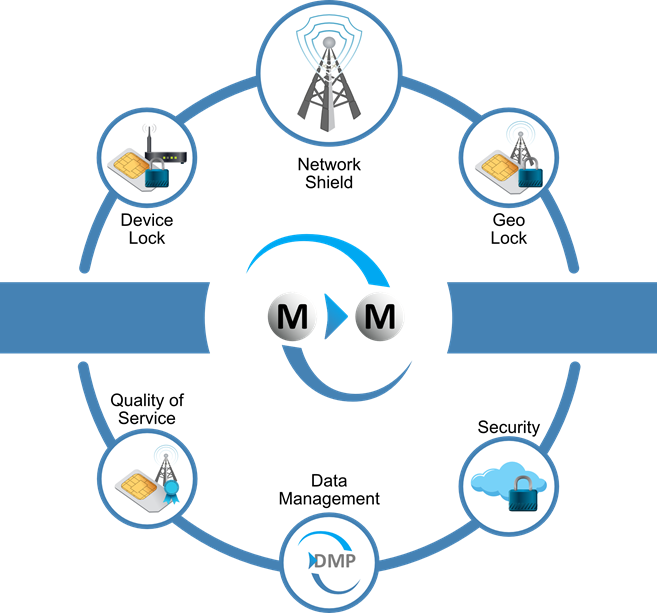
Network Shield provides an elegant and powerful mechanism for managing SIM cards that generate
unwanted traffic on the
network. It is a module of MobiWork’s M2M SIM Management Platform. Other
modules include Device Lock, Geo-lock, Quality of Service Monitoring, Data Management and an end-to-end Security module. The
M2M SIM Management Platform, with
complimentary products such as the Dynamic SIM Provisioning platform, provide
tools for MNOs and M2M Service Providers to manage all aspects of the SIM cards
in their devices, from activation until termination.